CRM & ERP Software: A Practical Guide to Modern Business
CRM and ERP software help organizations manage customer relationships, financial data, operations, inventory, and business workflows through connected digital systems.
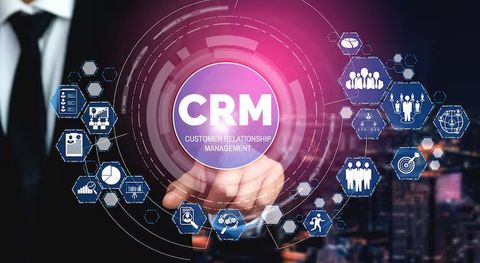
CRM and ERP software are two important categories of business technology. A Customer Relationship Management (CRM) system organizes information related to customers, prospects, communications, and sales activities. An Enterprise Resource Planning (ERP) system connects internal processes such as accounting, inventory, procurement, production, human resources, and supply chain management.
These platforms exist because businesses often handle large amounts of information across separate spreadsheets and applications. A connected software environment can create a more consistent view of business data and reduce repetitive manual processes.
CRM focuses mainly on customer-facing activities, while ERP focuses on broader internal operations. When integrated, the two systems can provide a more complete picture of how customer activity connects with inventory, finance, fulfillment, and other processes.
Why CRM and ERP Matter Today
Modern organizations generate data from websites, customer interactions, transactions, inventory systems, accounting processes, and digital communication. Managing this information efficiently has become increasingly important.
CRM software can help organizations organize:
- Customer profiles and interaction history
- Lead and opportunity information
- Communication records
- Sales pipeline activities
- Customer support information
ERP software can organize areas such as:
- Accounting and financial management
- Inventory management
- Procurement and supply chain planning
- Production and warehouse operations
- Workforce and resource planning
The combination can improve business process automation, enterprise data management, workflow management, cloud ERP, customer data management, and business intelligence.
Recent CRM and ERP Developments
Artificial intelligence has become a major theme in enterprise software during 2025 and 2026. Modern ERP platforms are increasingly incorporating generative AI and agentic AI to analyze information, automate routine workflows, identify exceptions, and support operational decisions. McKinsey reported in May 2026 that AI and agentic systems were moving beyond individual ERP tasks toward broader process orchestration.
ERP discussions in 2026 also emphasize composable ERP, supply-chain visibility, data quality, cloud architecture, predictive analytics, and AI-enabled automation.
Another important development is AI governance. In the European Union, the AI Act reached a major application milestone on August 2, 2026, while certain provisions have different implementation dates. Transparency requirements for specific AI systems also began applying in August 2026.
These developments make data quality, cybersecurity, human oversight, and responsible AI usage increasingly relevant when organizations evaluate CRM and ERP technology.
Laws, Privacy, and Technology Policies
CRM and ERP platforms can process personal, financial, employee, and operational information. Therefore, organizations need to consider applicable privacy and data-protection requirements.
For organizations handling European personal data, the General Data Protection Regulation (GDPR) establishes principles including lawfulness, fairness, transparency, purpose limitation, data minimization, accuracy, storage limitation, integrity, and confidentiality.
Organizations using AI-enabled CRM or ERP functions in the European Union should also consider the EU AI Act where applicable. Requirements can depend on the type and risk level of the AI system and how it is used.
Other jurisdictions may have their own privacy, cybersecurity, records-retention, and data-transfer requirements. Organizations should therefore review the rules applicable to their location and industry before configuring data workflows.
Tools and Resources
Useful resources for understanding CRM and ERP systems include:
- CRM and ERP comparison checklists
- Data-mapping templates
- Workflow documentation templates
- Inventory planning worksheets
- Customer-data governance checklists
- Business intelligence dashboards
- Data-quality assessment tools
- Privacy and compliance checklists
- AI governance frameworks
- Process-mapping diagrams
A structured evaluation can compare integration capabilities, data security, reporting functions, scalability, automation features, user permissions, and compatibility with existing business processes.
Frequently Asked Questions
What is CRM software?
CRM software organizes customer-related information and interactions. It commonly supports contact management, communication tracking, opportunity management, and customer data organization.
What is ERP software?
ERP software connects internal business processes such as finance, inventory, procurement, production, and supply-chain management within a unified information environment.
Can CRM and ERP systems work together?
Yes. Integration can allow relevant customer, financial, inventory, and operational information to move between systems, subject to proper permissions and data governance.
Is cloud ERP different from traditional ERP?
Cloud ERP is hosted through cloud computing infrastructure and is generally accessed through internet-connected systems. Traditional ERP may operate through infrastructure managed directly by an organization.
Does AI change CRM and ERP software?
Yes. AI can support areas such as data analysis, workflow automation, forecasting, summarization, recommendations, and conversational interfaces. Human review and appropriate governance remain important for consequential decisions.
Conclusion
CRM and ERP software have evolved from basic record-keeping applications into connected platforms supporting data management, automation, analytics, and business operations. CRM primarily focuses on customer information, while ERP connects broader internal processes.
In 2026, artificial intelligence, cloud architecture, data quality, cybersecurity, and regulatory governance are shaping the next stage of enterprise software. Organizations can benefit from evaluating these technologies according to their actual workflows, information requirements, security responsibilities, and applicable regulations rather than choosing technology based only on emerging features.
Disclaimer:
This article is for general educational purposes. Technology capabilities, privacy requirements, and AI regulations can change over time. Organizations should review current rules and obtain appropriate professional guidance for specific regulatory or compliance questions.