Stainless Steel Tubing Guide With Material Grades And Industrial Applications
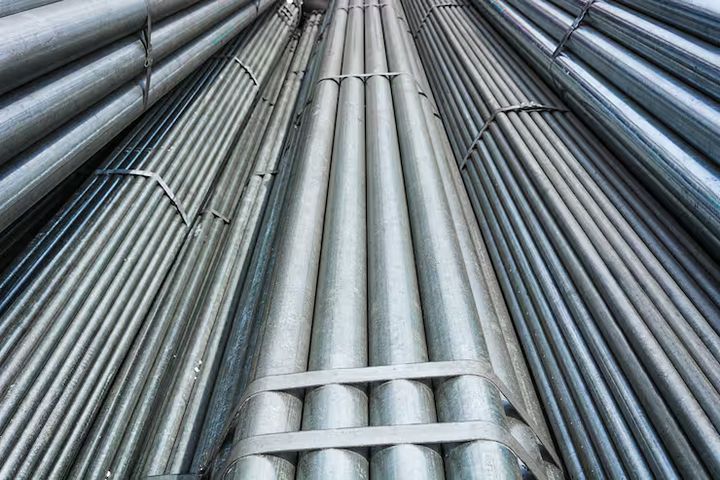
Stainless steel tubing is a versatile engineering material widely used for transporting liquids, gases, steam, chemicals, and structural loads across industrial, commercial, and engineering applications. Manufactured from corrosion-resistant stainless steel alloys, these tubes offer excellent mechanical strength, durability, hygienic properties, and resistance to high temperatures and aggressive environments. Modern stainless steel tubing is produced through advanced forming, welding, seamless manufacturing, heat treatment, and precision finishing technologies to meet demanding industrial performance requirements.
According to global manufacturing research, stainless steel tubing technology continues to advance through precision forming equipment, automated welding systems, laser inspection, non-destructive testing, intelligent quality monitoring, and advanced alloy development. These innovations improve dimensional accuracy, corrosion resistance, mechanical performance, and manufacturing efficiency. Modern production facilities increasingly integrate digital inspection systems with automated production lines to maintain consistent quality while supporting high-volume manufacturing.
Understanding stainless steel tubing helps mechanical engineers, plant designers, maintenance professionals, construction specialists, manufacturing managers, and engineering students appreciate the importance of material selection in industrial systems. Learning about tubing grades, manufacturing processes, engineering properties, and industrial applications provides valuable knowledge about one of the most widely used materials in modern engineering.
Importance Of Stainless Steel Tubing
Stainless steel tubing supports chemical processing, food manufacturing, pharmaceutical production, oil and gas operations, water treatment, power generation, construction, automotive engineering, marine applications, renewable energy, and industrial machinery. These industries depend on stainless steel because it combines excellent corrosion resistance with dependable mechanical performance under demanding operating conditions.
Compared with many conventional materials, stainless steel tubing provides longer service life, reduced maintenance requirements, and improved resistance to moisture, chemicals, oxidation, and temperature variations. Smooth internal surfaces also support efficient fluid flow while simplifying cleaning in hygienic applications.
Engineering Insight:
Materials engineers frequently observe that selecting the appropriate stainless steel grade contributes more to long-term system reliability than increasing wall thickness alone. Proper material compatibility with the operating environment generally improves equipment lifespan while reducing maintenance costs.
Recent Developments In Stainless Steel Tubing Technology
Modern stainless steel tubing manufacturing has advanced through automated tube mills, laser welding, precision cold drawing, digital dimensional measurement, ultrasonic inspection, and predictive maintenance systems. These technologies improve product consistency while reducing manufacturing variation.
Machine vision systems continuously inspect tube dimensions, weld quality, surface finish, and straightness throughout production. Automated quality monitoring allows manufacturers to identify process variations immediately while maintaining strict engineering standards.
Industrial automation has also expanded across tubing production facilities. Modern manufacturing equipment communicates with production planning software, maintenance platforms, laboratory testing systems, and quality assurance databases to improve manufacturing efficiency while supporting continuous process optimization.
Stainless Steel Tubing Grade Comparison
| Material Grade | Primary Advantage | Common Industrial Application |
|---|---|---|
| Grade 304 | General corrosion resistance | Food Processing |
| Grade 304L | Improved weldability | Process Piping |
| Grade 316 | Enhanced chemical resistance | Marine Engineering |
| Grade 316L | Excellent corrosion protection | Pharmaceutical Industry |
| Grade 321 | High-temperature stability | Heat Processing Equipment |
| Grade duplex Stainless Steel | High mechanical strength | Industrial Infrastructure |
Each material grade supports different engineering requirements. Grade 304 provides versatile corrosion resistance, 304L improves welded construction, 316 withstands aggressive environments, 316L supports hygienic processing, 321 performs well at elevated temperatures, and duplex stainless steel offers increased strength for demanding industrial applications.
Working Process And Manufacturing Technology
Stainless steel tubing manufacturing begins with carefully selected stainless steel alloys prepared according to required chemical composition and mechanical properties. Raw material enters forming equipment where strip material or billets are transformed into tubular shapes through controlled manufacturing processes.
Seamless tubing is produced by piercing solid billets followed by rolling and drawing operations that create tubes without longitudinal welds. Welded tubing is manufactured by forming stainless steel strip into cylindrical shapes before precision welding joins the edges together. Modern laser and automated welding technologies produce strong, consistent weld quality suitable for demanding industrial applications.
Following tube formation, heat treatment processes may be applied to improve mechanical properties, relieve internal stresses, and optimize corrosion resistance. Cold drawing and sizing operations further enhance dimensional accuracy while achieving precise outside diameter, wall thickness, and surface finish requirements.
Practical Engineering Observation:
Manufacturing evaluations frequently demonstrate that proper surface finishing significantly improves corrosion resistance in demanding environments. Smooth, contamination-free surfaces generally provide better long-term performance than rough or improperly finished tubing.
Finished tubing undergoes comprehensive inspection using dimensional measurement, pressure testing, non-destructive examination, surface inspection, and mechanical testing before packaging. Automated quality assurance systems verify compliance with engineering specifications while maintaining production consistency.
Routine preventive maintenance remains essential throughout manufacturing operations. Regular inspection of forming rolls, welding equipment, drawing dies, heat treatment furnaces, cutting systems, inspection devices, lubrication equipment, sensors, and production controls helps maintain manufacturing accuracy while reducing unexpected downtime.
Industrial Applications
Stainless steel tubing supports chemical processing, food production, pharmaceuticals, oil and gas, water treatment, power generation, marine engineering, automotive manufacturing, renewable energy, construction, and industrial machinery.
Chemical processing facilities utilize stainless steel tubing for transporting process fluids, chemicals, steam, and gases while maintaining corrosion resistance. Food and beverage manufacturers rely on hygienic tubing systems that support clean processing and efficient sanitation procedures.
Pharmaceutical facilities require high-purity stainless steel tubing throughout production systems, laboratory equipment, and clean manufacturing environments. Oil and gas operations depend on corrosion-resistant tubing within processing plants and fluid transport systems, while marine engineering applications utilize stainless steel because of its resistance to challenging environmental conditions. Renewable energy installations, industrial machinery, and architectural construction also benefit from durable stainless steel tubing.
Professional Insight:
Successful tubing performance depends on integrating correct material grade selection, proper manufacturing quality, preventive maintenance, operating condition evaluation, routine inspection, and professional installation into one coordinated engineering system. Appropriate material selection generally contributes more to long-term reliability than increasing component size alone.
Frequently Asked Questions
What is stainless steel tubing?
Stainless steel tubing is a corrosion-resistant tubular product manufactured from stainless steel alloys for transporting fluids, supporting structures, and serving industrial engineering applications.
What are the main grades of stainless steel tubing?
Common grades include 304, 304L, 316, 316L, 321, duplex stainless steel, and other specialized alloys selected according to application requirements.
How is stainless steel tubing manufactured?
Tubing is produced through seamless or welded manufacturing processes followed by forming, heat treatment, sizing, inspection, and quality testing before final distribution.
Which industries commonly use stainless steel tubing?
Chemical processing, food manufacturing, pharmaceuticals, oil and gas, marine engineering, renewable energy, construction, water treatment, automotive manufacturing, and industrial machinery widely use stainless steel tubing.
Why is preventive maintenance important?
Routine maintenance improves system reliability, extends equipment lifespan, preserves corrosion resistance, reduces unexpected downtime, supports safe operation, and maintains efficient industrial performance.
Conclusion
Stainless steel tubing remains one of the most important engineering materials because it provides excellent corrosion resistance, reliable mechanical strength, hygienic performance, and long-term durability across numerous industrial sectors. Advances in alloy technology, precision manufacturing, automated inspection, and digital quality control continue improving stainless steel tubing performance throughout modern engineering.
From an engineering perspective, successful tubing performance depends on proper material grade selection, precision manufacturing, preventive maintenance, routine inspection, correct installation, and continuous quality assurance. As industrial technology continues advancing, stainless steel tubing will remain fundamental to efficient fluid handling, structural reliability, and dependable engineering applications.