Commercial Coffee Equipment: Guide to Smarter Cafe Setup
Commercial coffee equipment includes the machines, grinders, brewing systems, water tools, and accessories used to prepare coffee at consistent volume. Understanding these systems helps cafés, restaurants, hotels, offices, and kitchens choose equipment that fits their workflow, energy needs, and food-safety requirements.
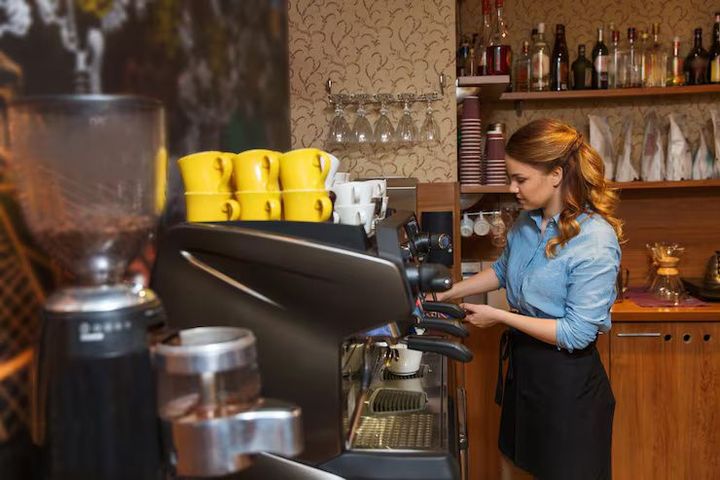
Commercial coffee equipment exists because professional coffee preparation requires greater consistency, capacity, durability, and control than typical household equipment. A modern setup may include espresso machines, commercial grinders, batch brewers, hot-water systems, filtration units, refrigeration, and cleaning tools.
The right equipment depends on the menu and expected demand. Espresso-focused cafés may prioritize multi-group machines and precise grinders, while offices may need high-capacity batch brewers.
Importance
Coffee equipment affects beverage consistency, workflow, energy use, hygiene, and productivity. Poorly matched equipment can create bottlenecks, uneven extraction, temperature problems, or unnecessary energy use.
Energy efficiency is increasingly important. ENERGY STAR states that certified commercial coffee brewers are 27% more energy efficient than standard models and may use insulated tanks and automatic power-down features. Its category covers specific batch and satellite brewer types, excluding espresso machines and several other categories.
Recent Updates
From 2025 into 2026, equipment development has continued to emphasize automation, energy efficiency, digital controls, and resource management. Modern systems increasingly use programmable settings, electronic temperature controls, automatic cleaning cycles, and improved heat management.
Sustainability is also receiving more attention. Recent industry reporting has highlighted experiments with electric and solar-powered coffee roasting, although larger-scale adoption remains limited by equipment capacity and energy infrastructure.
In November 2024, the FDA published a supplement to the 2022 Food Code. It added or clarified provisions involving disinfection of food-contact and nonfood-contact equipment surfaces and other food-safety controls.
A quick comparison clarifies common equipment roles:
| Equipment type | Main purpose | Typical setting |
|---|---|---|
| Espresso machine | Espresso-based drinks | Cafés, restaurants |
| Commercial grinder | Consistent coffee grinding | Cafés, hotels |
| Batch brewer | Larger-volume brewed coffee | Offices, dining areas |
| Water filtration | Water quality management | Most coffee operations |
| Hot-water system | Tea and manual brewing | Cafés, hospitality |
Laws or Policies
In the United States, the FDA Food Code is a model framework used by state, local, tribal, and territorial authorities when developing food-safety rules. It covers retail and food establishments and includes provisions related to equipment, utensils, sanitation, water, plumbing, and waste. Local requirements can differ because jurisdictions adopt and modify the model code.
For equipment, the 2022 Food Code clarified that equipment certified to an appropriate American National Standard can be considered compliant with certain sanitation provisions. Operators should check the rules adopted by their local health authority before installing or modifying commercial coffee equipment.
Tools and Resources
Useful planning resources include:
- Equipment capacity worksheets for estimating daily beverage volume.
- Electrical-load calculators for checking power requirements.
- Water-quality testing kits and filtration assessment tools.
- Preventive-maintenance checklists for cleaning, inspection, and calibration.
- Energy-efficiency databases for comparing certified commercial equipment.
- Food-safety training materials and local inspection checklists.
- Workflow templates for mapping grinding, brewing, preparation, cleaning, and storage.
FAQs
What is commercial coffee equipment?
It is professional-grade equipment designed for repeated coffee preparation in cafés, restaurants, hotels, offices, and institutional kitchens.
Why is a commercial grinder important?
Grinding consistency strongly affects extraction. A suitable grinder helps maintain repeatable particle size and supports more consistent brewing.
Does water quality matter?
Yes. Water chemistry can influence flavor, scale formation, equipment performance, and cleaning requirements. Filtration should match local water conditions and equipment specifications.
Are ENERGY STAR coffee machines available for every type?
No. ENERGY STAR currently certifies certain commercial batch and satellite brewers, while its category excludes espresso machines, bean-to-cup brewers, urn brewers, and several other types.
What should be checked before installation?
Review electrical requirements, water connections, drainage, ventilation where applicable, available workspace, sanitation requirements, and the capacity of the equipment relative to expected demand.
Conclusion
Commercial coffee equipment combines technology, workflow, water management, energy control, and food safety. Choosing equipment based on beverage volume and operating conditions can support consistency and efficient kitchen operations. Recent developments show movement toward automation, energy efficiency, and resource management. Because regulations vary by location, businesses should review current local food-safety requirements before equipment changes.
Disclaimer
This article is for general educational information. Regulations, equipment specifications, certification requirements, and energy programs can change by jurisdiction and product category. Confirm current requirements with the relevant local authority and equipment documentation.