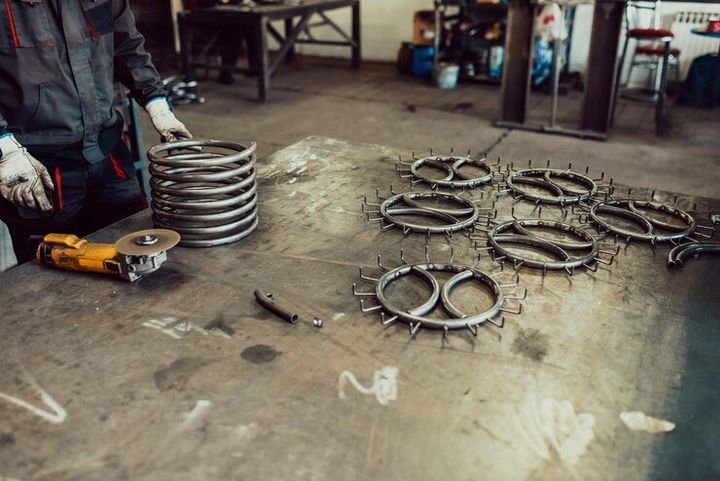
Industrial Gaskets Overview With Sealing Performance And Engineering Insights
Industrial gaskets are engineered sealing components designed to prevent the leakage of liquids, gases, steam, chemicals, and other process media between two mating surfaces. They create a reliable seal by filling microscopic irregularities between flanges, covers, valves, pumps, heat exchangers, pipelines, and industrial equipment. Modern gasket technology combines advanced materials, precision manufacturing, and engineering design to ensure dependable sealing performance under varying temperatures, pressures, and operating conditions. Industrial gaskets play an essential role in maintaining equipment efficiency, operational safety, and long-term system reliability across numerous industries.
According to global engineering research, sealing technology continues to advance through high-performance composite materials, precision manufacturing techniques, digital flange analysis, improved gasket coatings, and predictive maintenance systems. These developments improve sealing consistency, reduce maintenance frequency, enhance equipment lifespan, and support efficient industrial operations. Manufacturers continue developing gasket materials capable of performing under increasingly demanding mechanical and environmental conditions.
Understanding industrial gaskets helps engineers, maintenance professionals, production managers, plant operators, mechanical designers, and engineering students appreciate the importance of effective sealing technology. Learning about gasket materials, working principles, installation practices, and industrial applications provides valuable knowledge about one of the most critical components supporting industrial machinery and process equipment.
Importance Of Industrial Gaskets
Industrial gaskets are widely used in manufacturing plants, chemical processing facilities, oil and gas systems, food processing, pharmaceutical production, water treatment, power generation, marine engineering, mining operations, and heavy industrial machinery. These industries depend on reliable sealing systems to maintain safe operating conditions while preventing fluid leakage and pressure loss.
Effective sealing improves equipment performance by maintaining system pressure, reducing product loss, protecting surrounding equipment, and minimizing maintenance requirements. Proper gasket selection also contributes to improved operational efficiency by supporting stable process conditions throughout continuous industrial operations.
Engineering Insight:
Maintenance engineers frequently observe that sealing reliability depends as much on flange condition, bolt tightening accuracy, and installation quality as on gasket material. Even premium gasket materials may underperform if mating surfaces are damaged or improperly assembled.
Recent Developments In Gasket Technology
Recent developments have significantly improved industrial gasket performance. Modern gasket materials now include advanced graphite composites, reinforced fiber materials, expanded polytetrafluoroethylene, spiral wound constructions, metal-reinforced sealing systems, and high-performance elastomers designed for demanding industrial environments.
Digital flange analysis software assists engineers in selecting appropriate gasket materials based on pressure, temperature, chemical compatibility, bolt loading, and flange geometry. These tools improve engineering accuracy while supporting long-term sealing performance.
Condition monitoring technology has also expanded throughout industrial facilities. Smart maintenance systems analyze operating conditions, vibration, pressure changes, and maintenance history to help identify sealing issues before equipment performance is affected.
Industrial Gasket Comparison
| Gasket Type | Primary Advantage | Common Industrial Application |
|---|---|---|
| Spiral Wound Gasket | High pressure resistance | Pipeline Flanges |
| Graphite Gasket | High temperature stability | Heat Exchangers |
| Rubber Gasket | Flexible sealing | Water Systems |
| PTFE Gasket | Chemical resistance | Chemical Processing |
| Metal Gasket | Extreme operating conditions | Heavy Industrial Equipment |
| Compressed Fiber Gasket | General-purpose sealing | Pumps and Valves |
Each gasket serves different engineering requirements. Spiral wound gaskets support high-pressure applications, graphite gaskets withstand elevated temperatures, rubber gaskets provide flexible sealing, PTFE gaskets resist aggressive chemicals, metal gaskets perform under demanding conditions, and compressed fiber gaskets provide reliable general industrial sealing.
Working Process And Sealing Technology
Industrial gaskets operate by creating a compressed sealing barrier between two machined surfaces. During assembly, bolts apply controlled compression that forces the gasket material to conform to surface irregularities while creating a tight seal capable of containing internal pressure and preventing leakage.
The sealing process begins with proper flange preparation. Mating surfaces are cleaned and inspected to remove contamination, corrosion, scratches, or damage that could affect sealing performance. Accurate flange alignment also helps distribute compression evenly across the gasket surface.
Once positioned correctly, bolts are tightened according to specified torque sequences to achieve uniform gasket compression. Balanced loading prevents uneven stress distribution while maintaining consistent sealing pressure throughout the joint. Proper bolt tightening procedures are essential for maximizing gasket performance and equipment reliability.
Practical Engineering Observation:
Maintenance evaluations frequently demonstrate that incorrect bolt tightening contributes to gasket failure more often than material defects. Uniform bolt loading, accurate torque application, and proper installation procedures generally improve sealing performance more effectively than selecting a higher-grade gasket alone.
During equipment operation, the gasket continuously compensates for pressure fluctuations, thermal expansion, vibration, and mechanical movement while maintaining a reliable seal. Material flexibility and recovery characteristics allow the gasket to adapt to changing operating conditions without losing sealing integrity.
Routine preventive maintenance helps preserve sealing performance throughout equipment life. Regular inspection of flanges, bolts, gasket surfaces, pumps, valves, pressure vessels, heat exchangers, and pipeline connections allows maintenance teams to identify wear, corrosion, or relaxation before leakage develops. Scheduled replacement of aging gaskets also supports reliable long-term equipment operation.
Industrial Applications
Industrial gaskets support manufacturing plants, power generation facilities, chemical processing, pharmaceutical production, food manufacturing, water treatment, marine engineering, mining operations, pulp processing, construction equipment, and industrial machinery.
Chemical processing facilities rely on chemically resistant gasket materials to maintain secure sealing throughout reactors, pipelines, pumps, valves, and processing equipment. Power generation systems utilize high-temperature gasket technologies within boilers, turbines, steam piping, and heat exchangers operating under demanding conditions.
Food processing and pharmaceutical industries require hygienic gasket materials capable of supporting clean manufacturing environments. Water treatment facilities depend on durable sealing systems for pumps, filtration equipment, valves, and distribution pipelines. Industrial machinery manufacturers also utilize specialized gaskets throughout hydraulic systems, compressors, engines, and process equipment to maintain efficient operation.
Professional Insight:
Successful industrial sealing depends on treating the gasket as one component within a complete mechanical joint. Material selection, flange condition, bolt loading, installation quality, operating environment, and preventive maintenance collectively determine sealing reliability more effectively than gasket specification alone.
Frequently Asked Questions
What is an industrial gasket?
An industrial gasket is an engineered sealing component placed between two mating surfaces to prevent leakage of liquids, gases, steam, or chemicals during equipment operation.
What are the main types of industrial gaskets?
Common gasket types include spiral wound gaskets, graphite gaskets, rubber gaskets, PTFE gaskets, metal gaskets, compressed fiber gaskets, and elastomer sealing materials.
How does an industrial gasket work?
A gasket compresses between two mating surfaces, filling microscopic surface irregularities while creating a pressure-resistant seal that prevents leakage during equipment operation.
Which industries commonly use industrial gaskets?
Manufacturing, chemical processing, power generation, pharmaceuticals, food production, water treatment, mining, marine engineering, construction equipment, and industrial machinery widely use gasket technology.
Why is preventive maintenance important?
Routine maintenance preserves sealing performance, prevents leakage, extends equipment lifespan, reduces unexpected downtime, maintains operational safety, and supports reliable industrial production.
Conclusion
Industrial gaskets remain essential mechanical sealing components because they provide dependable leakage prevention, pressure retention, equipment protection, and reliable operational performance across numerous industrial applications. Advances in gasket materials, precision manufacturing, digital engineering, and predictive maintenance continue improving sealing reliability throughout modern industrial systems.
From an engineering perspective, successful gasket performance depends on appropriate material selection, accurate installation, proper flange preparation, balanced bolt loading, preventive maintenance, and routine inspection. As industrial technology continues advancing, modern gasket solutions will remain fundamental to efficient equipment operation, process reliability, and long-term engineering performance.