Rotary Screw Air Compressors: Essential Industrial Guide
Learn how rotary screw air compressors work, why they matter in industrial operations, recent technology developments, regulatory considerations, and practical tools for compressed air management.
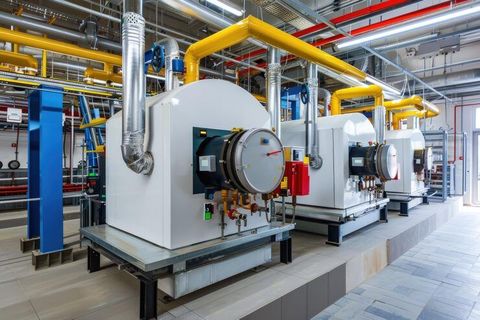
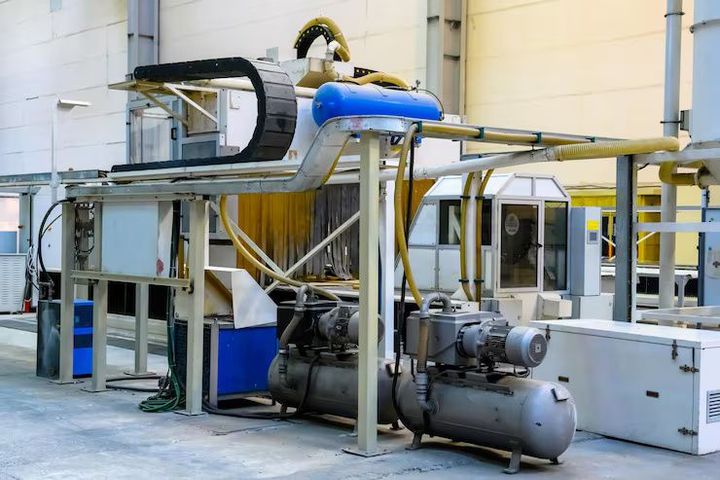
Rotary screw air compressors are industrial machines designed to produce compressed air continuously. Unlike reciprocating compressors that use pistons, these systems normally use two interlocking screw rotors to compress air inside a housing.
The basic process is straightforward. Air enters through an inlet, moves between the rotating screw elements, becomes compressed, and then passes through the discharge system. Oil-injected and oil-free configurations are available for different industrial requirements.
Compressed air is widely used because it can power pneumatic tools, automation equipment, packaging machinery, material-handling systems, instrumentation, and manufacturing processes.
Why This Technology Exists
Industrial facilities often need a steady supply of compressed air rather than short bursts. Rotary screw technology is designed for applications where continuous or frequently repeated operation is required.
Important specifications include:
- Airflow capacity
- Operating pressure
- Motor power
- Specific energy consumption
- Duty cycle
- Air quality requirements
- Variable speed drive capability
Choosing equipment according to actual demand is important because an incorrectly sized compressed air system can operate inefficiently.
Why Rotary Screw Compressors Matter Today
Supporting Modern Industrial Operations
Compressed air remains an important utility across manufacturing, food processing, automotive production, electronics, pharmaceuticals, packaging, and other industrial environments.
A properly designed industrial air compressor system can provide stable pneumatic power while supporting automated production equipment.
Energy efficiency has also become a major consideration. Compressor motors can operate for long periods, so electricity consumption depends heavily on operating pressure, airflow demand, control methods, leakage, and system design.
Variable speed drive compressors can adjust motor speed according to changing demand. This can help reduce unnecessary operation during periods when the plant requires less compressed air.
Problems the Technology Helps Address
Rotary screw compressors can support applications requiring:
- Continuous compressed air
- Stable pressure
- Automated pneumatic equipment
- High production uptime
- Centralized compressed air distribution
- Controlled air quality
However, efficiency depends on the complete system, not only the compressor. Air leaks, excessive pressure, poor piping design, unsuitable storage capacity, and unnecessary compressed-air use can all affect performance.
Recent Developments and Technology Trends
Efficiency and System Monitoring
During 2025 and 2026, compressed-air technology continued moving toward better energy measurement, system monitoring, and efficiency assessment.
ISO 11011 remains an important framework for evaluating compressed air systems across supply, transmission, and demand. The standard entered systematic review in October 2025, with the review closing in March 2026.
New ISO work is also developing around pneumatic-system efficiency. In 2026, ISO work items addressed energy-efficiency improvements for pneumatic distribution networks, while another developing standard focused on maintenance and monitoring of pneumatic systems.
Digital monitoring, variable speed control, leak detection, pressure sensors, and data-based maintenance are therefore becoming increasingly relevant to modern compressed air systems.
Laws, Standards, and Policies
Regulatory Considerations
Rules depend on the country, equipment category, installation, and intended application. Organizations should check the regulations that apply to their jurisdiction before selecting or operating industrial compressor equipment.
In the United States, the Department of Energy regulates certain commercial and industrial air compressors under federal energy-conservation rules. DOE states that compressors manufactured from January 10, 2025, must meet applicable energy-conservation standards, while updated compressor test-procedure amendments became effective April 2, 2025, with mandatory testing requirements beginning July 16, 2025.
Internationally, ISO 11011 provides a framework for assessing compressed-air energy efficiency. It considers the complete system from energy input through compressed-air use rather than examining the compressor alone.
Tools and Resources for Better Management
Practical Resources
Useful resources for understanding and managing rotary screw air compressors include:
- Compressed air flow calculators
- Pressure-drop calculators
- Compressor sizing worksheets
- Air leakage assessment checklists
- Energy monitoring meters
- Dew-point measurement tools
- Preventive maintenance schedules
- Compressed-air system assessment templates
- Pneumatic equipment documentation
- Industrial energy-efficiency guides
A system assessment should examine compressor loading, operating pressure, airflow demand, leakage, storage, piping, and end-use requirements.
FAQs About Rotary Screw Air Compressors
How does a rotary screw compressor work?
It uses rotating screw elements to trap and compress air continuously. The compressed air is then directed into the plant distribution system.
What is an oil-free rotary screw compressor?
An oil-free configuration is designed so that oil does not enter the compression chamber. It is used where particular air-quality requirements apply.
Why is variable speed control important?
Variable speed control allows compressor output to respond to changing demand. This can improve operating efficiency when airflow requirements fluctuate.
How often should a compressor be maintained?
Maintenance intervals depend on the compressor design, operating environment, duty cycle, manufacturer requirements, and operating conditions. Regular inspection helps identify issues before they affect system performance.
What affects compressed air efficiency?
Major factors include pressure settings, airflow demand, leaks, piping restrictions, compressor controls, air treatment, storage, and inappropriate compressed-air applications.
Conclusion
Rotary screw air compressors are an important part of many modern industrial air systems because they can provide continuous compressed air for automated and pneumatic applications. Their performance depends on more than compressor capacity alone.
Efficient system design, appropriate pressure management, leak control, monitoring, preventive maintenance, and accurate demand assessment can all contribute to better operation. Recent developments in energy assessment, digital monitoring, and pneumatic-system standards also show the industry's continuing focus on efficiency and responsible energy use.
Disclaimer:
This article is provided for general educational purposes. Equipment specifications, operating requirements, safety procedures, and regulatory obligations vary by application and jurisdiction. Always consult applicable technical documentation and local regulations before making engineering decisions.