Warehouse & Logistics Automation: A Practical Modern Guide
Warehouse and logistics automation combines robotics, software, sensors, and data systems to improve inventory movement, storage, picking, tracking, and supply chain coordination.
Warehouse and logistics automation refers to the use of technology to manage repetitive movement, storage, tracking, and coordination activities within warehouses and distribution environments. It combines equipment, software, sensors, artificial intelligence, and connected data systems.
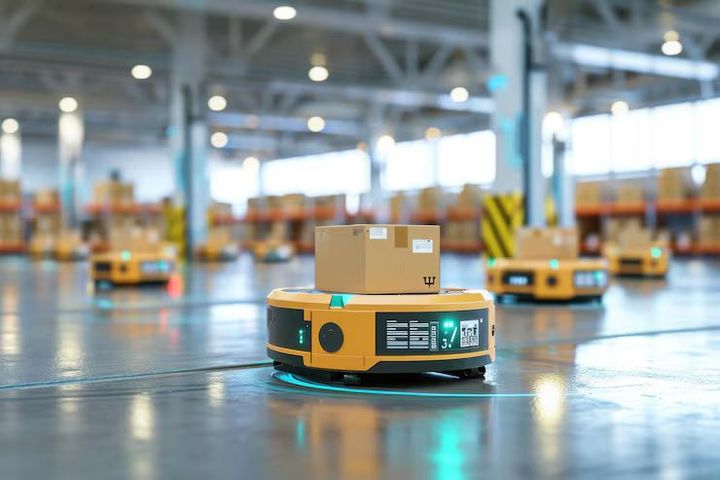
The concept developed from basic conveyor systems and barcode scanning into more advanced warehouse automation technologies. Modern facilities may use automated storage and retrieval systems (AS/RS), autonomous mobile robots (AMRs), automated guided vehicles (AGVs), robotic picking equipment, warehouse management software, and real-time inventory tracking.
The main purpose is not necessarily to remove people from warehouse operations. Instead, automation can handle repetitive or physically demanding activities while people focus on supervision, planning, exception handling, maintenance, and decision-making.
Why Warehouse Automation Matters Today
Modern supply chains manage large product volumes, changing demand patterns, tighter delivery schedules, and increasingly complex inventory requirements. Manual processes can become difficult to coordinate when warehouse activity grows.
Warehouse automation can address several common operational challenges, including:
- Repetitive material movement
- Inventory location errors
- Manual data entry
- Slow picking processes
- Limited warehouse visibility
- Congested movement areas
- Difficult inventory counting
- Inconsistent workflow coordination
Warehouse management systems can connect inventory records with receiving, storage, picking, packing, and dispatch activities. Sensors and scanning technologies can also provide more accurate information about where inventory is located.
Automation can be particularly relevant for retail distribution, manufacturing, food logistics, pharmaceutical distribution, and other environments where inventory accuracy and organized material flow are important.
| Automation Technology | Typical Role |
|---|---|
| AS/RS | Automated storage and retrieval |
| AMRs | Internal material transportation |
| AGVs | Guided movement of goods |
| Robotic arms | Picking and handling |
| Barcode/RFID | Inventory identification |
| WMS | Warehouse data and workflow management |
Recent Developments in Warehouse Automation
Warehouse automation has continued moving toward artificial intelligence, robotics, connected systems, and flexible automation. In March 2025, Gartner identified polyfunctional robots, agentic AI, autonomous data collection, and decision intelligence among emerging supply chain technology trends.
During 2025, autonomous mobile robots and AS/RS also received greater attention as warehouses looked for flexible ways to manage inventory movement and storage. AI-driven analytics and digital warehouse models are increasingly being used to understand operational patterns and support planning.
Research published in June 2025 also examined machine-learning approaches for improving robotic package picking, showing how AI research is becoming increasingly connected with real-world warehouse automation.
Safety remains an important part of this transition. In April 2026, the U.S. Occupational Safety and Health Administration highlighted hazards associated with conveyors, automated equipment, and industrial robots in warehouse environments.
Laws, Safety Rules, and Technology Policies
Warehouse automation is affected by workplace safety, machinery, data protection, electrical, and artificial intelligence rules. Requirements vary by country and by the type of equipment being used.
In the United States, OSHA guidance emphasizes identifying hazards associated with automated equipment and robotics and ensuring appropriate worker protection. Automated systems should therefore be integrated with suitable safety procedures and workplace controls.
In the European Union, the AI Act is also relevant when artificial intelligence is incorporated into regulated environments. The Act became applicable in stages, with major provisions applying from August 2, 2026, while certain high-risk systems embedded in regulated products have extended timelines.
Organizations should review applicable national machinery, workplace safety, cybersecurity, data protection, and AI requirements before deploying advanced automation.
Useful Tools and Resources
Several categories of tools can help users understand and plan warehouse automation:
- Warehouse management software for inventory and workflow tracking
- Transportation management platforms for logistics coordination
- Inventory forecasting calculators
- Warehouse layout planning templates
- Barcode and RFID tracking tools
- Robotics simulation platforms
- Digital twin tools for facility modelling
- Equipment safety checklists
- Supply chain performance dashboards
- Government workplace safety guidance
A useful starting point is to document existing warehouse processes before selecting technology. This helps identify repetitive tasks, bottlenecks, inventory issues, and areas where automation may be appropriate.
Frequently Asked Questions
What is warehouse automation?
Warehouse automation uses equipment and software to automate or support activities such as storage, inventory tracking, picking, sorting, and internal material movement.
What technologies are used?
Common technologies include AS/RS, AMRs, AGVs, robotic arms, conveyors, RFID, barcode systems, warehouse management software, sensors, and artificial intelligence.
Can automation improve inventory accuracy?
It can support better inventory visibility by combining scanning, sensors, software records, and automated data collection. Results depend on system design, data quality, maintenance, and operational practices.
Is warehouse automation only for large facilities?
No. Automation can range from individual scanning or conveyor technologies to highly integrated robotic facilities. The appropriate approach depends on warehouse size, product characteristics, workflow complexity, and operational requirements.
Is worker safety still important with automation?
Yes. Automation introduces its own hazards, including interaction with moving equipment and robots. Safety planning, training, guarding, and appropriate workplace procedures remain important.
Conclusion
Warehouse and logistics automation is becoming an important part of modern supply chain technology. Robotics, warehouse management software, AI, sensors, and automated storage systems can improve visibility and organize repetitive warehouse activities.
However, successful automation requires more than advanced equipment. Clear processes, reliable data, safety planning, system integration, and appropriate human oversight are equally important. As technology continues developing, flexible and data-driven warehouse automation is likely to remain an important area of logistics innovation.
Disclaimer
This article is provided for general educational and informational purposes. Regulations and technology requirements can differ by country, industry, facility, and equipment type. Readers should review applicable local rules and obtain appropriate professional guidance for specific operational or compliance decisions.